.webp&w=256&q=75) University of Life Sciences „King Mihai I” Timișoara
University of Life Sciences „King Mihai I” Timișoara
About the Faculty of
Agriculture
The Faculty of Agriculture of the University of Life Sciences "King Michael I" in Timișoara has over 80 years of tradition in training specialists in agronomy, biology, cadastre, mechanics, and environmental protection. With a strong focus on research and innovation, it promotes a sustainable society and prepares competitive graduates at both national and international levels.
About the Faculty of
Agriculture
The Faculty of Agriculture of the University of Life Sciences "King Michael I" in Timișoara has over 80 years of tradition in training specialists in agronomy, biology, cadastre, mechanics, and environmental protection. With a strong focus on research and innovation, it promotes a sustainable society and prepares competitive graduates at both national and international levels.
Structure
Who we are
History
The Faculty of Agriculture within the University of Life Sciences "King Michael I" in Timișoara has a tradition of over 80 years in higher agronomic education in Romania. Its origins date back to 1940, when, following the Vienna Dictate, the "Academy of High Agronomic Studies Cluj" took refuge in Timișoara, where it continued its activity under the name "Faculty of Agronomy Cluj-Timișoara," part of the Polytechnic University. After the end of the war, on July 30, 1945, King Michael I promulgated Law no. 617, which established the Faculty of Agronomy in Timișoara. The remaining professors and students formed the core of the new institution, and through royal donation, the university received several teaching farms, including those in Timișoara, Ceala-Arad, Voiteni, and Teremia-Mare. In 1948, with the education reform, the Agronomic Institute of Timișoara was created, having as its only faculty that of Agriculture. Over the decades, the faculty has constantly developed, becoming a cornerstone of the University of Life Sciences "King Michael I" in Timișoara.
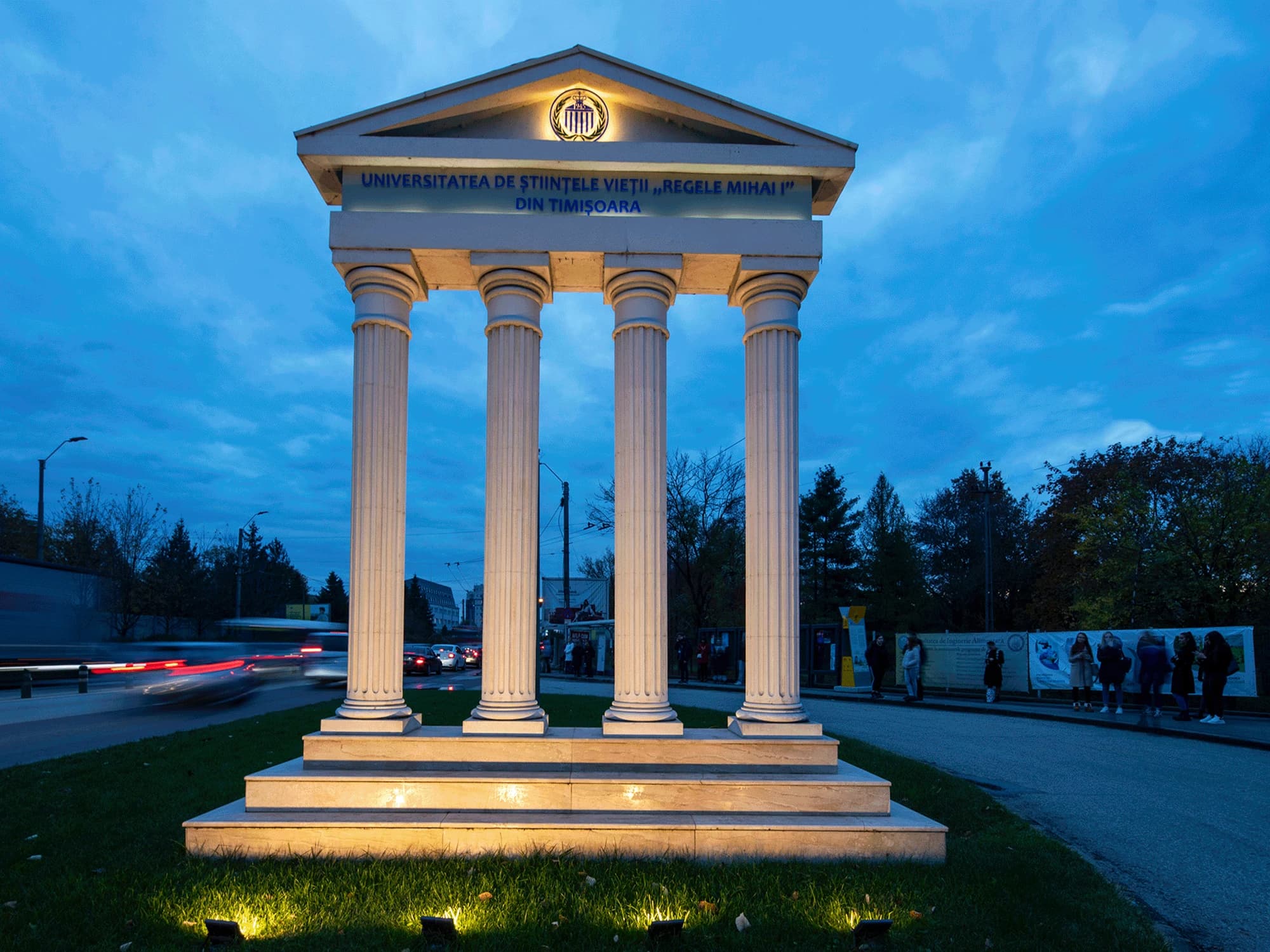
History
The Faculty of Agriculture within the University of Life Sciences "King Michael I" in Timișoara has a tradition of over 80 years in higher agronomic education in Romania. Its origins date back to 1940, when, following the Vienna Dictate, the "Academy of High Agronomic Studies Cluj" took refuge in Timișoara, where it continued its activity under the name "Faculty of Agronomy Cluj-Timișoara," part of the Polytechnic University. After the end of the war, on July 30, 1945, King Michael I promulgated Law no. 617, which established the Faculty of Agronomy in Timișoara. The remaining professors and students formed the core of the new institution, and through royal donation, the university received several teaching farms, including those in Timișoara, Ceala-Arad, Voiteni, and Teremia-Mare. In 1948, with the education reform, the Agronomic Institute of Timișoara was created, having as its only faculty that of Agriculture. Over the decades, the faculty has constantly developed, becoming a cornerstone of the University of Life Sciences "King Michael I" in Timișoara.
Description
The Faculty of Agriculture has established itself as a reference institution in the training of specialists in the agricultural, biological, geodetic, mechanical, and environmental protection fields, constantly adapting to the evolution of scientific knowledge and the needs of society. Initially operating only with the specialization in Agriculture, new programs were later introduced to meet the demands of modern agriculture. Currently, the faculty offers study programs at the bachelor's, master's, and doctoral levels in various fields: Agriculture, Plant Protection, Biology, Engineering and Environmental Protection in Agriculture, Land Surveying and Cadastre, as well as Machines and Installations for Agriculture and the Food Industry. Additionally, the faculty collaborates with institutions and universities worldwide through Erasmus+ programs and strategic partnerships, providing students with opportunities for international training and professional development.
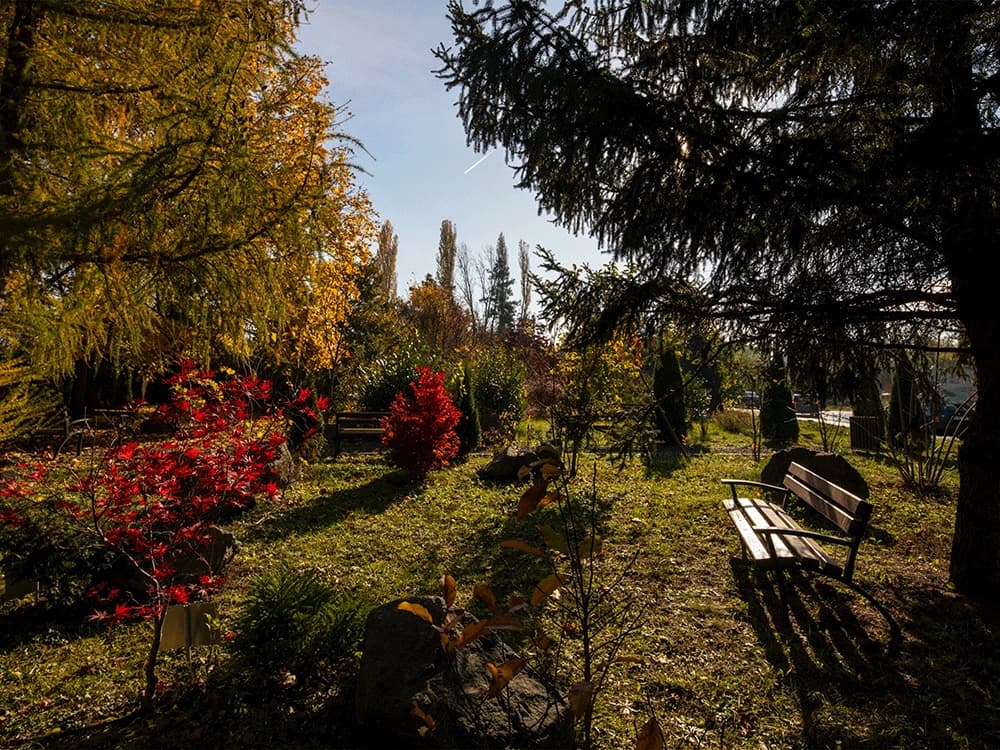
Description
The Faculty of Agriculture has established itself as a reference institution in the training of specialists in the agricultural, biological, geodetic, mechanical, and environmental protection fields, constantly adapting to the evolution of scientific knowledge and the needs of society. Initially operating only with the specialization in Agriculture, new programs were later introduced to meet the demands of modern agriculture. Currently, the faculty offers study programs at the bachelor's, master's, and doctoral levels in various fields: Agriculture, Plant Protection, Biology, Engineering and Environmental Protection in Agriculture, Land Surveying and Cadastre, as well as Machines and Installations for Agriculture and the Food Industry. Additionally, the faculty collaborates with institutions and universities worldwide through Erasmus+ programs and strategic partnerships, providing students with opportunities for international training and professional development.
Mission
The mission of the Faculty of Agriculture is to contribute to the development of a sustainable and innovative society by training well-prepared professionals capable of responding to the current challenges of the environment and the global economy. Its activities focus on scientific research, heritage conservation, reducing the carbon footprint, adapting to climate change, and protecting biodiversity. Through active involvement in national and international projects, the faculty supports the transfer of knowledge to farmers, companies, and local communities, contributing to sustainable development. Graduates are prepared for careers in agri-business, research, public institutions, or to become entrepreneurs in innovative fields. The Faculty of Agriculture thus establishes itself as a pillar of scientific and social progress, uniting tradition with innovation in the service of the future of Romanian society.
Leadership
Academic and administrative leadership structure of the faculty, with assignments, mandates and composition of the faculty council and the dean's team.
.webp%3F2026-02-12T00%3A36%3A50.699Z&w=3840&q=75)
Newsletter
Subscribe to our newsletter
Subscribe to receive the latest information about university activities, academic and research initiatives, events dedicated to students and partners, collaboration opportunities, international projects, and updates from the life of USVT.